Preschool vs Daycare: What's the Difference?

For many Australian families, the moment a child turns one or two, a familiar question starts popping up at playgroups, family dinners, and school gate chats: should you send your little one to daycare, or wait for preschool? On the surface, the two seem interchangeable — both involve dropping your child off somewhere safe while you head to work, and both promise to help your child grow and learn. But dig a little deeper, and you'll find that preschool and daycare are actually built around quite different goals, structures, and age groups.
If you're a parent in Sydney's North West — perhaps in Riverstone, Marsden Park, Tallawong, Schofields, Bella Vista, or South Wentworthville — this decision carries extra weight because it shapes your child's daily routine, social development, and school readiness for years to come. This guide unpacks the preschool vs daycare debate in plain English, so you can make a confident, informed decision for your family.
Quick Answer: Preschool vs Daycare in a Nutshell
Before we get into the details, here's the short version:
- Daycare (also called long day care) is designed for babies, toddlers, and preschool-aged children, generally from six weeks to five years old. It typically runs full working days, all year round, and focuses on care, nurturing, and play-based learning suited to each developmental stage.
- Preschool (sometimes called kindergarten, depending on your state) is generally aimed at children aged three to five, in the one or two years before they start formal schooling. It usually runs shorter sessions, follows school-term dates, and places a stronger emphasis on structured, teacher-led learning that prepares children for the classroom.
Many centres today — including long day care services — actually deliver an embedded preschool program within their daily routine, which is where a lot of the confusion comes from. Let's break down exactly what sets them apart.
What Is Daycare?
Daycare, formally known as long day care, is an early childhood education and care service that typically operates from around 6:30am or 7am to 6pm, Monday to Friday, all year round (with the exception of public holidays). It's designed to support working parents who need reliable, full-day care for children ranging from young babies through to children about to start school.
Daycare centres in Australia are regulated under the National Quality Framework (NQF), which sets consistent standards for staff qualifications, educator-to-child ratios, health and safety, and educational programming across the country. According to the Australian Children's Education and Care Quality Authority (ACECQA), the NQF was introduced in 2012 to raise education and care standards across long day care, family day care, preschool, kindergarten, and outside-school-hours-care services alike. This means that even though daycare and preschool feel different day to day, they're both held to the same national quality benchmark.
Key Features of Daycare
- Wide age range: Babies from as young as six weeks through to children aged five, often grouped into rooms based on developmental stage (nursery, toddlers, junior preschool, senior preschool).
- Full-day, full-year operation: Ideal for parents balancing work and family life, with flexible enrolment (2, 3, or 5 days a week).
- Routine-based care: Sleep, meals, nappy changes, and rest times are built into the day alongside play and learning.
- Continuity: Children can often stay at the same centre from infancy right through to their pre-Kindy year, which builds strong, trusted relationships with educators.
- Embedded early learning: Most quality long day care centres — including Little Leapers — now weave a structured, play-based educational program into the day, particularly for children aged three and above, so kids aren't "missing out" on preschool-style learning just because they attend a daycare setting.
What Is Preschool?
Preschool (called kindergarten in Victoria and Western Australia, and sometimes "kindy" colloquially across the country) is generally a standalone educational program for children in the one to two years before starting school, usually between ages three and five. Sessional preschools typically operate for shorter hours — often 6 to 9 hours a day — and follow the school calendar, meaning they close for school holidays.
Preschool programs are led by qualified early childhood teachers and are more intentionally structured around specific learning outcomes: pre-literacy and numeracy skills, independence, following instructions, group participation, and emotional regulation — all skills that help smooth the transition into formal schooling. As the Raising Children Network explains, preschool helps children learn and develop through play while getting them ready for school, with programs generally becoming available in the year a child turns four.
Key Features of Preschool
- Narrower age focus: Typically children aged three to five, in their final year or two before school.
- Term-time operation: Mirrors the school calendar, with holiday closures.
- Shorter daily sessions: Rather than a full working day, sessions may run for a set number of hours.
- School-readiness focus: Strong emphasis on structured learning, transition-to-school skills, and teacher-led group activities.
- Qualified teacher-led: Programs are typically overseen by a degree-qualified early childhood teacher.
The Real Difference: Purpose, Not Just Hours
The biggest misconception in the preschool vs daycare conversation is that it's simply about "how many hours" or "which building." In reality, the difference comes down to purpose and philosophy.
Daycare is built around the whole family's needs — flexible hours that support working parents, care across a wide age range, and a nurturing, home-away-from-home environment. Preschool, on the other hand, is built primarily around the child's transition to school — shorter, more structured sessions that mirror a classroom setting and specifically target school-readiness milestones.
That said, in Australia, these lines are increasingly blurred. Many long day care centres — like Little Leapers — deliver a dedicated preschool program within their existing long day care structure. This is sometimes referred to as an "embedded" or "integrated" preschool program. It means your child gets the full-day flexibility of daycare while still receiving a genuine, teacher-guided preschool curriculum in the lead-up to school. For working families, this hybrid approach is often the most practical solution, because it removes the need to juggle two separate services (a daycare centre for younger children and then a separate stand-alone preschool at age four).
Why the Distinction Matters for Australian Families
Understanding this difference matters for a few practical reasons:
- Funding and subsidies. The Australian Government's Child Care Subsidy (CCS) applies to approved long day care services, while stand-alone preschools may be funded differently depending on your state or territory, sometimes through programs like the Preschool Reform Agreement. This is government funding that ensures a qualified early childhood teacher works with children for at least 15 hours a week over 40 weeks a year, and it can be delivered in a preschool, a school, or a child care centre. This means a quality daycare centre with an embedded preschool program can, in many cases, deliver the same government-recognised preschool hours as a stand-alone preschool — while also giving you full-day flexibility.
- Routine disruption. If you're currently using daycare and considering a switch to a stand-alone preschool, think about how the shorter hours and term-time-only calendar will affect your work schedule and any need for before/after-hours or holiday care.
- Social and developmental continuity. Children often thrive on consistency. Moving from a familiar daycare centre to a brand-new preschool environment can be an added transition on top of starting "big school" the following year. An embedded preschool program lets children stay within a centre and educator team they already trust while still building the skills they need.
- Quality assurance. Regardless of which model you choose, always check the service's rating under the National Quality Standard, which includes seven quality areas that matter for children's outcomes. Services are assessed and rated against these areas by their state or territory regulatory authority. You can look up any service's current rating on the free government website StartingBlocks.gov.au before enrolling.
What Should You Actually Look for in Either Option?
Whether you land on daycare, preschool, or a hybrid model, here are the essentials worth checking:
- A National Quality Standard rating of "Meeting" or higher — this is publicly available and gives you an independent, government-verified snapshot of quality.
- Qualified educators, including a degree-qualified early childhood teacher for the preschool room or program.
- A genuine play-based curriculum aligned with the Early Years Learning Framework, rather than screen-heavy or unstructured "babysitting."
- Low educator-to-child ratios, especially for younger age groups.
- Strong communication with families — daily updates, learning portfolios, and regular parent-teacher conversations.
- A safe, stimulating environment, both indoors and outdoors, with age-appropriate equipment.
- A smooth transition-to-school process, including school readiness assessments, visits to local schools, and structured routines that mirror a classroom.
Little Leapers: Bringing Preschool and Daycare Together
At Little Leapers, we've built our centres around the idea that families in Sydney's growing North West shouldn't have to choose between flexibility and quality early education. Our long day care programs are designed to support children from babies through to school starters, with an embedded, teacher-led preschool program woven into the daily routine for children in their final years before school.
This means whether your family needs full-time care because both parents are working, or you're specifically looking for structured preschool preparation, Little Leapers is built to flex around your needs — without compromising on the depth or quality of the educational program your child receives. Our educators are trained to nurture each child's individual pace of development, using play-based learning that builds pre-literacy, numeracy, social-emotional, and independence skills well before your child sets foot in a Kindergarten classroom.
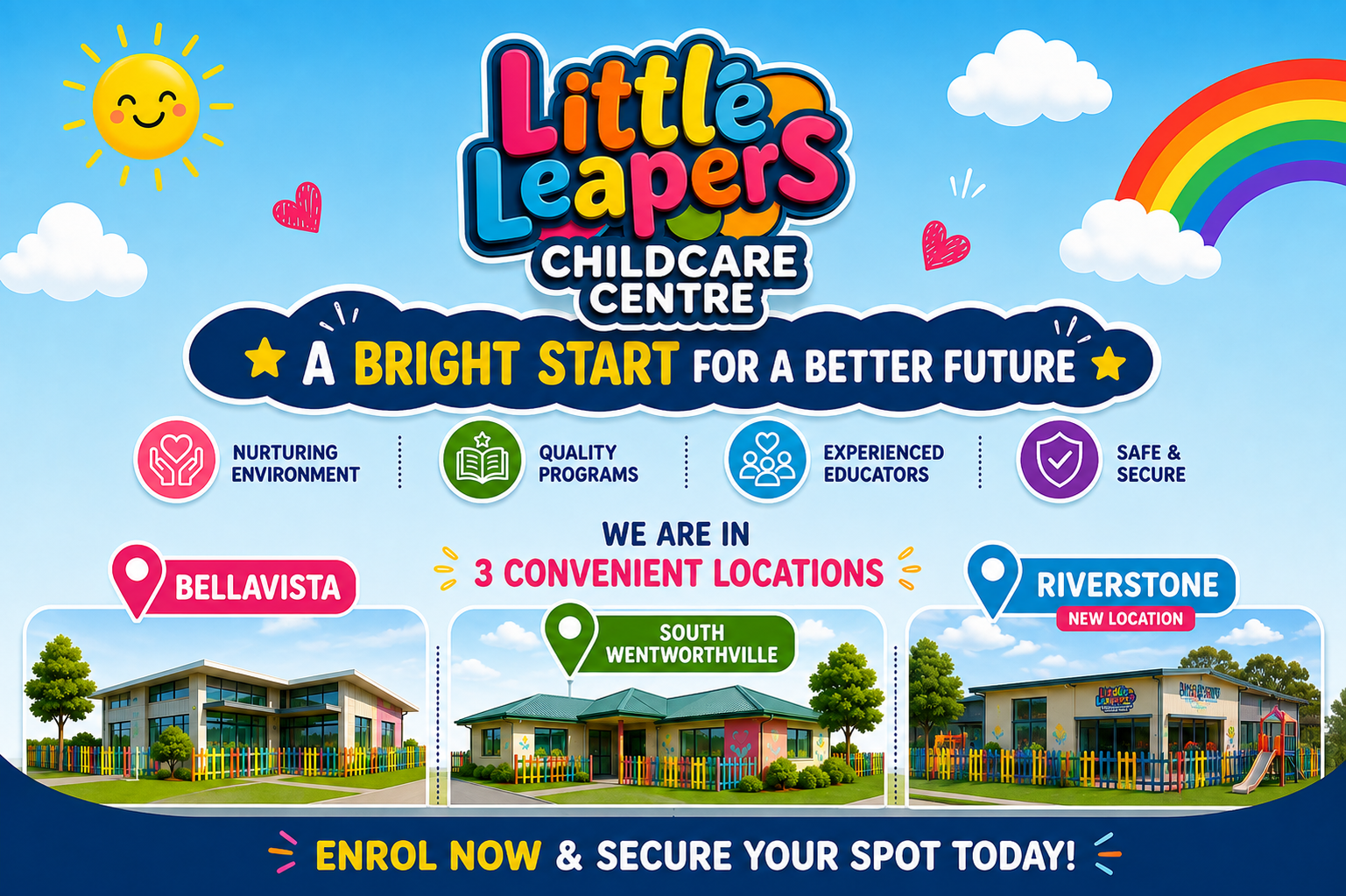
We currently support families across Sydney's North West Growth Area, with centres serving communities including our Childcare Centre Riverstone, our purpose-built Early Learning Centre, and nearby families looking for a Childcare Centre Marsden Park, a Childcare Centre Tallawong, a Childcare Centre Schofields, a Childcare Centre Bella Vista, and a Childcare Centre South Wentworthville. Each Little Leapers centre follows the same core philosophy — nurturing, high-quality early learning delivered by qualified educators — while being tailored to the local community it serves.
If you're weighing up preschool vs daycare and want an option that gives you both, it's worth booking a tour of your nearest Little Leapers centre to see our embedded preschool program in action and speak with our educators about what would suit your child best.
Preschool vs Daycare: A Side-by-Side Comparison
| Feature | Daycare (Long Day Care) | Preschool |
|---|---|---|
| Typical age range | 6 weeks – 5 years | 3 – 5 years |
| Operating hours | Full working day (e.g. 7am–6pm) | Shorter sessions (e.g. 8:30am–3pm) |
| Calendar | Runs all year round | Follows school term dates |
| Staffing | Qualified educators across age groups | Degree-qualified early childhood teacher |
| Focus | Care, nurturing, and developmental play | School readiness and structured learning |
| Best suited to | Working families needing full-day flexibility | Families wanting a dedicated pre-school-year program |
| Embedded option | Many centres, including Little Leapers, offer a preschool program within long day care | N/A – preschool is the standalone model |
Common Mistakes Parents Make When Choosing Between Preschool and Daycare
Even with all the information above, it's easy to fall into a few traps when comparing preschool vs daycare. Here are some of the most common ones we see families run into, and how to avoid them.
Assuming "preschool" always means better quality. The word "preschool" can sound more academic or prestigious than "daycare," but quality has nothing to do with the label and everything to do with the National Quality Standard rating, staff qualifications, and the actual program on offer. A well-run long day care centre with an embedded preschool program can offer a richer, more consistent learning experience than a stand-alone preschool with high turnover or a thin curriculum.
Choosing based on hours alone, without factoring in transitions. It's tempting to pick whichever option fits your work schedule most neatly, but it's worth thinking about how many transitions your child will go through before starting school. Some children handle multiple changes of centre and educators well; others find frequent transitions unsettling. If your child has been happily settled in a daycare environment since infancy, moving them to an entirely new preschool setting for just one year before school starts might not always be the smoothest path — especially if their current centre already offers a genuine preschool program.
Overlooking the outdoor and physical development side of the program. Both preschool and daycare should offer more than just desks and worksheets. Look for centres that prioritise outdoor play, gross motor development, and nature-based learning alongside pre-literacy and numeracy activities. Play-based learning is not "just play" — it's how young children build problem-solving skills, resilience, and social confidence.
Not asking about the transition-to-school process. A strong early learning program, whether it's called preschool or an embedded program within daycare, should include a clear transition-to-school plan. Ask prospective centres how they prepare children in their final year — do they run mock "school days," visit local primary schools, or work directly with school teachers to share developmental information? These small details often make the biggest difference in how confident and ready your child feels on their first day of Kindergarten.
Forgetting to check waitlists and enrolment timing. Because so many Sydney families are weighing up the same preschool vs daycare decision, quality centres in growing suburbs can fill up quickly. If you're considering options around Riverstone, Marsden Park, Tallawong, Schofields, Bella Vista, or South Wentworthville, it pays to enquire early, particularly for enrolment in the year before school.
How Little Leapers Supports School Readiness
School readiness isn't just about knowing the alphabet or counting to twenty — it's a much broader set of skills that early childhood experts describe as "the whole child" approach. At Little Leapers, our embedded preschool program is designed around this broader view of readiness, covering:
- Independence and self-help skills, such as managing personal belongings, following multi-step instructions, and toileting independently.
- Social-emotional development, including turn-taking, conflict resolution, and building friendships in a group setting.
- Early literacy and numeracy foundations, introduced through hands-on, play-based activities rather than rote learning.
- Fine and gross motor skills, supported through outdoor play, art, and structured physical activities.
- Confidence and communication, encouraging children to express their needs, ask questions, and participate in group discussions.
Our educators track each child's progress against the Early Years Learning Framework and share regular updates with families, so you always know how your child is developing and what to expect as they approach their first year of school. This individualised approach is part of why so many families across Sydney's North West trust Little Leapers with both their full-day care needs and their child's preschool preparation.
Final Thoughts
There's no single "correct" answer in the preschool vs daycare debate — the right choice depends on your family's routine, your child's personality, and what kind of learning environment will help them thrive. What matters most is choosing a service that's genuinely high-quality, well-rated, and staffed by educators who care about your child's individual growth.
For families across Riverstone, Marsden Park, Tallawong, Schofields, Bella Vista, and South Wentworthville, Little Leapers offers a way to get the best of both worlds: the flexibility and continuity of long day care, combined with a genuine, teacher-led preschool program that sets your child up for a confident start to school. If you'd like to see it for yourself, we'd love to welcome you and your little one for a centre tour.
Frequently Asked Questions
No. Daycare (long day care) generally covers a much wider age range, from babies to school starters, and runs full working days across the whole year. Preschool is generally aimed at three-to-five-year-olds, runs shorter sessions, and follows the school term calendar. However, many long day care centres now include an embedded preschool program, so children can receive both types of care within one setting.
In most Australian states and territories, children can begin a preschool program in the year they turn four, with some services also offering three-year-old programs. Long day care centres with an embedded preschool program often introduce structured, teacher-led learning progressively from around age three.
In many cases, yes. Under the Preschool Reform Agreement, government-funded preschool hours can be delivered in a preschool, a school, or a child care centre, as long as a qualified early childhood teacher is leading the program for the required hours. It's worth confirming directly with your chosen centre and checking your state or territory's specific guidelines.
For most working families, long day care (with an embedded preschool program) offers more practical flexibility, since it runs full days across the entire year rather than short, term-time-only sessions. Stand-alone preschool can work well if a parent or carer is available for the shorter hours and school holiday breaks.
Every approved education and care service in Australia is assessed and rated against the National Quality Standard by its state or territory regulatory authority. You can look up a service's current rating for free on the government's StartingBlocks.gov.au website before you enrol.
Both are common. Some families move their child to a stand-alone preschool in the year before school for a more classroom-style routine. Others prefer the continuity of staying at a familiar long day care centre — like Little Leapers — that offers an embedded preschool program, so children keep the same educators, friends, and environment right up until they start school.
 Chat with us