

Childcare Centre Riverstone: How to Choose the Best Childcare for Your Child?

Choosing a childcare centre Riverstone families can rely on is one of the biggest decisions you'll make in your child's early years. Riverstone, in Sydney's North West Growth Area, has changed enormously over the past decade. New housing estates, new schools, and a growing number of young families have turned this once-quiet town into one of the fastest-developing suburbs in New South Wales. With that growth has come a wider range of early learning options, which is great news for parents, but it also makes the decision a little more overwhelming.
If you're a parent in Riverstone, Marsden Park, Tallawong, or Schofields trying to work out which service is right for your child, this guide walks you through exactly what to look for, what questions to ask, and how to compare your options with confidence. At Little Leapers, we know how personal this decision is, so we've put together this guide to help you make the choice that's right for your family.
Why Choosing the Right Childcare Centre Matters
The early years, from birth to five, are when a child's brain develops faster than at any other stage of life. A high-quality early learning environment doesn't just look after your child while you work; it actively shapes their social skills, language development, emotional regulation, and school readiness. Getting this decision right sets the foundation for the rest of their education.
That's why it's worth taking the time to properly compare a Riverstone Early Learning Centre against other services in the area, rather than simply choosing whatever has a vacancy closest to home. Centres like Little Leapers have grown alongside the local community, so it's worth understanding what sets a genuinely high-quality service apart before you make your choice.
Understanding Australia's Childcare Quality Standards
Before you tour a single centre, it helps to understand how childcare services in Australia are actually regulated and assessed. Every approved service, whether it's a long day care centre, family day care, or outside school hours care, operates under the National Quality Framework (NQF), which is overseen by the Australian Children's Education and Care Quality Authority (ACECQA). Under this framework, services are assessed against the National Quality Standard (NQS), which covers seven quality areas, including educational programmes, children's health and safety, staffing arrangements, and governance.
Each service is given a public rating, ranging from "Significant Improvement Required" through to "Exceeding NQS" and "Excellent". This is one of the simplest and most reliable ways to compare a childcare centre in Riverstone, NSW, wide, since it's an independent, government-backed assessment rather than marketing material from the centre itself.
You can look up any registered service's current rating, fees, vacancies, and inclusions on Starting Blocks, the free government website designed specifically to help families compare children's education and care services. It's worth checking this before you even book a tour, so you walk in already knowing how the centre has performed in its most recent assessment.
Key Factors to Consider When Choosing a Childcare Centre in Riverstone
The quality of a childcare centre comes down to its people. Ask about the qualifications of the educators, how long staff have been with the centre, and what the staff-to-child ratios look like for each age group. Under the National Law, ratios are strictly regulated (for example, one educator for every four babies under two), but the best centres often maintain ratios well above the legal minimum, and low staff turnover is usually a strong sign of a healthy workplace culture, which flows through to how children are cared for.
A genuine early learning programme should be built around the Early Years Learning Framework (EYLF), Australia's national curriculum for children from birth to five. Ask how educators plan learning experiences around each child's individual interests, how they document and share progress with families, and how the programme balances structured learning with free play. The raisingchildren.net.au parenting website, developed by the Murdoch Children's Research Institute and Australian government partners, is a genuinely useful independent resource for understanding what quality early learning should look like at different ages.
Walk through the centre with a critical eye. Are outdoor areas fenced and shaded appropriately for the Australian sun? Is there a clear sign-in and sign-out process? How does the centre handle allergies, medication, and illness? Ask about their sun protection policy, sleep and rest practices for babies, and emergency procedures. A centre that's genuinely confident in its safety practices will be happy to talk you through all of this in detail.
For most families, a Childcare Centre Riverstone location needs to actually fit into daily life, not just look good on paper. Think about your commute, drop-off and pick-up times, and whether the centre's opening hours match your work schedule. Riverstone's location is a genuine advantage here: it sits close to the growing hubs of Childcare Centre Marsden Park, Childcare Centre Tallawong, and Childcare Centre Schofields, so many families in this corridor have a realistic choice of several quality services within a short drive rather than being limited to one option.
If you commute towards the Sydney Metro North-west line, a centre near Tallawong or Schofields station might make more sense for your routine than one right in Riverstone itself, so it's worth mapping out your actual daily route before deciding.
Childcare in Australia isn't cheap, but the Child Care Subsidy (CCS) can significantly reduce your out-of-pocket costs depending on your family income, activity levels, and the number of children you have in care. From 5 January 2026, eligible families are guaranteed a minimum of 72 hours of subsidised care per fortnight under the new "3-Day Guarantee" reform, regardless of work or study activity, with some families eligible for up to 100 hours. You can check your eligibility and estimated subsidy through Services Australia, which administers CCS on behalf of the federal government.
When comparing fees, ask each centre for a full breakdown, including the daily rate, the CCS gap fee after your subsidy is applied, and any additional costs for excursions, nappies, or extracurricular programmes. The cheapest centre isn't automatically the best value; look at what's actually included in the daily fee before comparing numbers side by side.
Spend time in the actual rooms your child would be in, not just the reception area. Is there enough natural light? Are resources and toys age-appropriate and well maintained? Is the outdoor play space varied, with room for climbing, digging, and quiet play? Centres that invest properly in their physical environment tend to invest properly in their educators and programmes too.
Ask whether meals are prepared on-site or catered, how menus are planned, and how the centre manages dietary requirements and allergies. Good centres will happily share a sample menu and explain how they introduce children to a variety of foods in a way that supports healthy eating habits.
You want a centre that treats you as a genuine partner in your child's learning, not just a drop-off point. Ask how they communicate daily updates (an app, a diary, or verbal handover); how often they run parent-educator conversations; and how open they are to feedback. Strong communication is often one of the clearest signs of a centre's overall culture.
Finally, trust your instincts. Every family has a different sense of what feels right, whether that's a strong focus on outdoor nature play, bilingual programmes, or a particular cultural or community connection. Visit more than one centre, watch how educators interact with children during your tour, and ask yourself honestly whether you can picture your child settling in happily.
Comparing Childcare Options Across Riverstone, Marsden Park, Tallawong, and Schofields
Because this corridor of Sydney's North West has grown so quickly, many families don't limit their search to a single suburb. A 'Best Childcare Centre Riverstone' search often turns up strong options a few minutes down the road too. Here's a simple way to think about the comparison:
- Riverstone: Established community feel with a growing number of new services opening alongside new housing developments.
- Marsden Park: A newer, rapidly expanding suburb with modern centres often purpose-built alongside new schools and shopping precincts.
- Tallawong: Convenient for families using the Sydney Metro North-west, with several centres located near the station and surrounding residential estates.
- Schofields: A well-established option with a longer track record of services, useful if you value a centre with a longer operating history and established reputation.
Rather than assuming the closest centre is automatically the right one, it's worth shortlisting two or three services across these suburbs, checking their NQS ratings on Starting Blocks, and booking tours at each before making your final decision. Little Leapers is proud to be part of this growing Riverstone community, and we always encourage families to compare their options and choose the service that feels right for them.
A Practical Checklist Before You Enroll
Before signing up, it helps to walk in with a short list of questions:
- What is the centre's current National Quality Standard rating, and when was it last assessed?
- What are the qualifications and experience levels of the educators in my child's room?
- What does a typical day look like for my child's age group?
- How does the centre communicate with families day to day?
- What is the full weekly cost after my estimated CCS subsidy?
- What is the centre's policy on illness, allergies, and medication?
- How does the centre support children settling in for the first time?
- Are there waitlists, and how far in advance should I enrol?
Taking notes during each tour makes it much easier to compare centres objectively once you've seen a few in person, rather than relying on first impressions alone.
Final Thoughts
There's no single "best" childcare centre for every family. The right childcare centre Riverstone option for you will depend on your work schedule, your budget, your child's personality, and the values that matter most to your family. What matters most is doing the groundwork: checking official NQS ratings, visiting in person, asking direct questions, and genuinely trusting how your child responds during a visit.
Whether you end up choosing a Riverstone Early Learning Centre or a service just over the border in Marsden Park, Tallawong, or Schofields, taking the time to compare properly now will pay off for years to come. If you'd like to see what a genuinely community-focused approach to early learning looks like, the team at Little Leapers would love to show you around and answer any questions you have.
Frequently Asked Questions
Every approved childcare service in Australia is assessed against the National Quality Standard by its state regulatory authority. You can search for any service, including its current quality rating, on the free government website Starting Blocks, which is run in partnership with ACECQA.
In practice, the terms are often used interchangeably in Australia. Both typically operate under the same National Quality Framework and deliver programmes based on the Early Years Learning Framework, though individual centres may use "early learning centre" in their name to emphasise their educational focus.
Daily fees vary between centres and depend on factors like location, age group, and inclusions. Most families are eligible for the Child Care Subsidy, which reduces out-of-pocket costs based on income and activity level. You can estimate your subsidy through Services Australia.
Most centres accept children from around six weeks of age through to school entry, though availability for babies' rooms can be more limited, so it's worth enquiring early, ideally before your baby is born if you know you'll need care.
Given how quickly the Riverstone, Marsden Park, and Tallawong areas have grown, it's common for families to join waitlists six to twelve months ahead of their desired start date, particularly for popular centres or specific age groups like the nursery room.
It's worth comparing all your realistic options rather than limiting yourself to one suburb. Many families in this corridor find a centre in a neighbouring suburb that better fits their commute, budget, or availability, so it's worth touring a few before deciding.
A notebook or your phone to jot down answers; a list of questions specific to your family's needs (allergies, routines, work hours); and, if possible, your child, so you can see how they respond to the environment and educators.
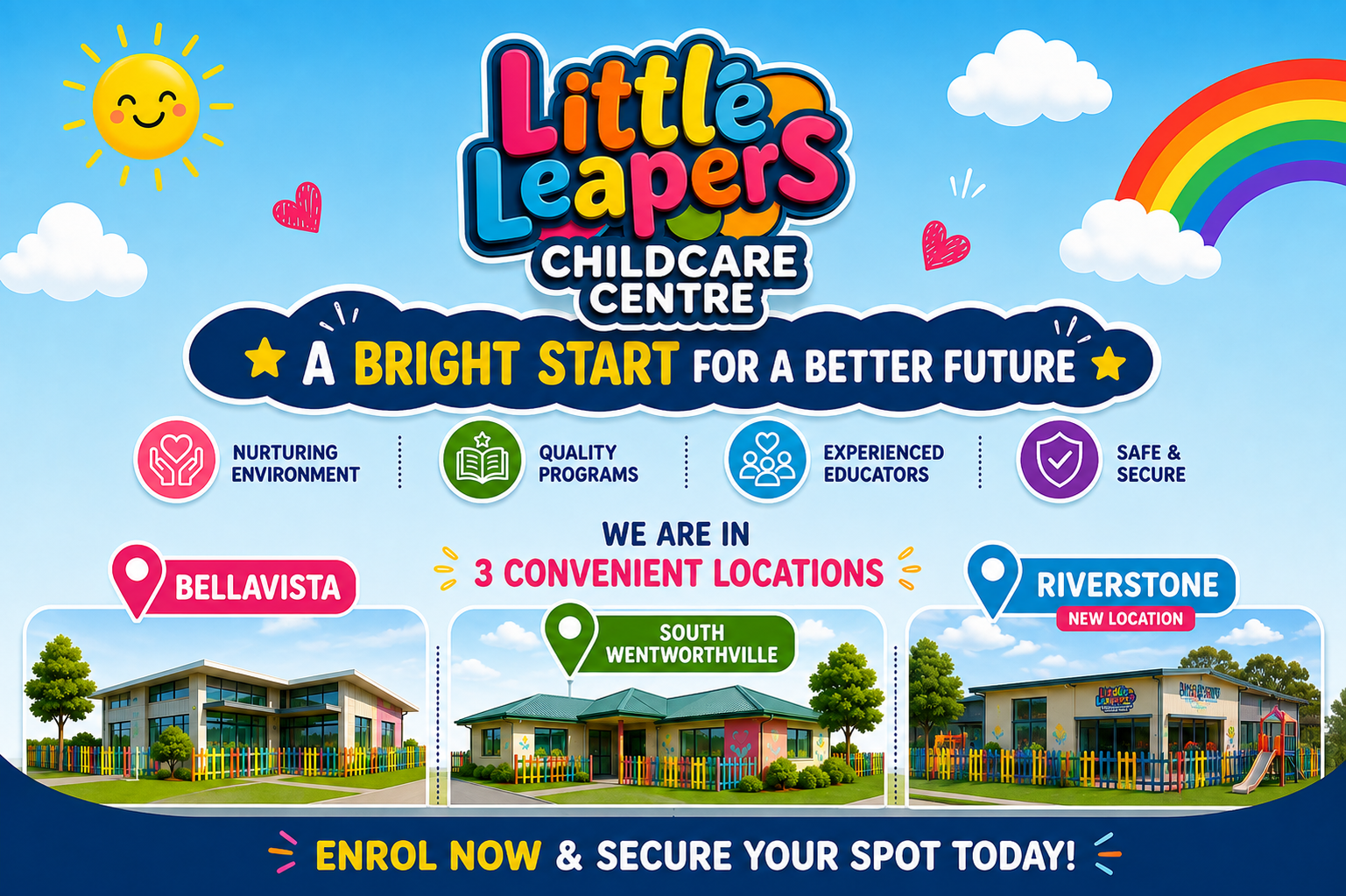
Little Leapers is focused on being a genuine part of the Riverstone community, with an approach built around individual learning, open communication with families, and a warm, settled environment for children. The best way to see this for yourself is to book a tour and meet the educators in person.
 Chat with us